Adaptive Equal Loudness Compensation

A virtual Audio DSP,
embedded in your Bluetooth SoC.

MalleusTek (錘骨科技) focuses on professional Bluetooth audio algorithms. Our AWK (Audio Wizard Kit) ports into any SoC with a DSP or FPU and unleashes its compute the way an external ADI SigmaStudio or TI PurePath would — without the cost, board space or power penalty.

32-bit Floating Point RAM/ROM < 40KB Assembly-Optimized Multi-Platform Verified In Mass Production

About MalleusTek

Why bolt on an external DSP, when the algorithm can live inside the chip?

Bluetooth SoCs ship with limited DSP libraries — too basic for high-fidelity tuning. The traditional answer has been to add a dedicated Audio DSP (ADI SigmaStudio, TI PurePath), but it brings system complexity, higher cost, larger PCB area and more power draw. MalleusTek's AWK (Audio Wizard Kit) embeds into any chip with a DSP or FPU and delivers Audio-DSP-class processing inside the existing Bluetooth SoC.

32-bit
Float Precision
<40KB
RAM/ROM Footprint
5+
Core Algorithms

MalleusTek AWK Advantages

  • Low system resource demand, low BOM cost
  • Portable to any Bluetooth SoC with FPU or DSP
  • RAM/ROM footprint under 40KB
  • High performance, high precision
  • Mainly assembly-optimized — small code, fast execution
  • Minimum 32-bit floating-point resolution
  • Customizable tuning toolchain per customer system

Core Algorithm Stack

Six building blocks. One coherent listening experience.

Malleus AELC v2.0 combines six algorithms — equal-loudness compensation, sub-bass synthesis, spatial up-mix, loudness control, waveform protection and tri-band tone control — into a single high-precision pipeline.

AELC

Adaptive Equal Loudness Compensation

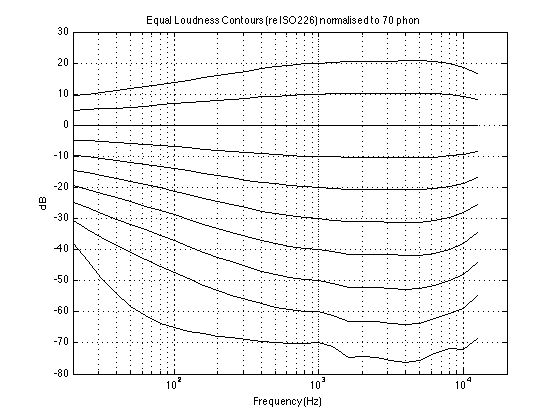
Per ISO 226 equal-loudness contours, the human ear's frequency response is non-linear with level. AELC dynamically rebalances highs and lows to match the input level and SPL — three-band loudness stays even at any volume.

  • Dynamic bass compensation (small volume → boost, large volume → suppress)
  • Dynamic treble compensation (avoid harshness loud, dullness quiet)
  • Eliminates distortion / pumping at high SPL
DHSB

Dynamic Hyperbolic Super Bass

A proprietary hyperbolic function + Fourier-series harmonic generator. For small drivers and open-ear (OWS) cavities whose f₀ is too high for conventional EQ — DHSB delivers a clean, deep, naturally-pitched low end.

  • Self-developed hyperbolic + Fourier harmonic shaping
  • Per-level & per-frequency precise harmonic control
  • Solves OWS bass deficiency without coloration
3D Spatial

Malleus 3D — Spatial Audio

Up-mixes stereo L/R into a 5-channel processed soundfield, then recomposes it for an immersive, theatre-like experience. Particularly addresses the narrow soundstage of open-ear designs.

  • Stereo → 5-ch → recompose pipeline
  • Scene-aware presets (Game / Cinema / Music)
SLC

Smart Loudness Control

SLC = SGC + AELC + AWL. SGC auto-gains the source to maximum loudness, AELC keeps the spectral balance, AWL stops clipping at the ceiling — so playlists hopping between Spotify, Apple Music, YouTube and TIDAL feel level-matched.

  • SGC: source-adaptive smart gain control
  • Eliminates volume jumps across streaming platforms
AWL

Adaptive Waveform Limiter

Pairs with DRC to suppress clipping before it generates square waves and DC drive into the speaker — protecting the driver and avoiding the harsh distortion that comes from late-acting AGC.

  • Pre-empts clipping, not just compresses output
  • Outdoor mode: maximum SPL at minimum distortion
Tri-Band

Independent Bass / Vocal / Treble

OWS fit varies with every ear — distance from canal affects bass and treble. We expose simple high/mid/low controls so end-users find the right balance without learning a parametric EQ.

  • App-controllable three-band tuning
  • Compensates inter-user fit variation

Algorithm Deep-Dive · AELC v2.0

Built on ISO 226. Tuned for every listening level.

Conventional volume control changes loudness linearly — but the ear doesn't. ISO 226 equal-loudness contours show response is non-linear in level and frequency. AELC reads input signal and output SPL in real time, and dynamically reshapes the high and low frequencies to keep three-band loudness perceptually flat.

ISO 226 equal-loudness contours
Fig. ISO 226 equal-loudness contours — human hearing is non-linear in level.

Reference at 70 phon — and rebalanced everywhere else.

Take 70 phon as the reference. As program level moves above or below this, highs and lows have to be re-weighted to preserve the same perceived tonal balance. Without this, you get the classic complaints: hollow vocals at low volume, harsh treble at high volume, distorted bass when you push it.

  • Low volume — bass disappears, vocals turn dull.
  • High volume — treble becomes piercing, bass distorts.
  • AELC response — dynamic, level-tracking three-band rebalance for the cleanest possible listen.
AELC v2.0 — Signal Processing Flow

Each stage is an enable-able module. Customers ship only what their tuning needs.

1

Input / Source Detect

Real-time level & spectrum analysis of the incoming PCM stream.

2

Malleus 3D

Stereo → 5-channel up-mix when Spatial Audio is enabled.

3

DHSB

Virtual sub-bass with adjustable DHSB_V Gain strength.

4

Dynamic 3-Band EQ

App-controlled Bass / Vocal / Treble offsets.

5

AELC + SLC

SGC + AELC balance loudness across sources and maintain tonal balance.

6

AWL Output Guard

Anti-clipping limiter feeding the DAC.

Without AELC — common product complaints

  • Low volume: insufficient bass · dull vocals
  • High volume: harsh treble · distorted & pumping bass
  • Linear EQ: tonal balance shifts with level
  • OWS form factor: small driver + open cavity → weak low end

With AELC v2.0 — what changes

  • Dynamic bass: boosts low SPL, suppresses high SPL — punchy and clean
  • Dynamic treble: avoids harsh / dull at the volume extremes
  • DHSB pairing: deep, controlled sub-bass even on small drivers
  • Smooth volume: no zipper noise on user gain changes

Algorithm Deep-Dive · DHSB

Deep bass. Naturally elastic.

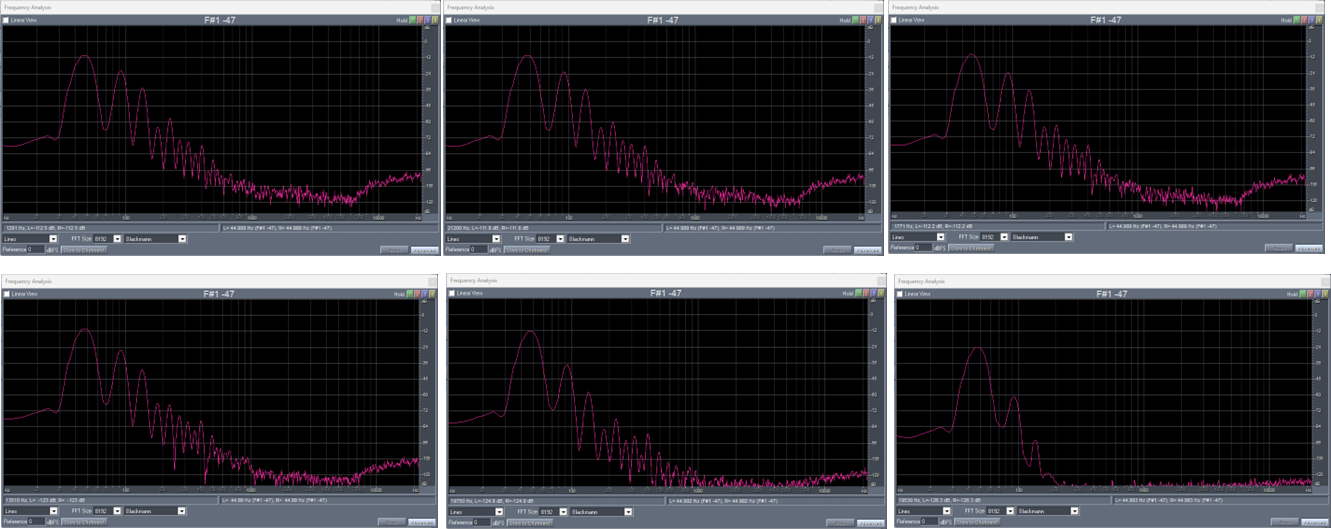
Open-ear (OWS) acoustics are constrained — small drivers (often 14–16 mm or less), open cavities, and a f₀ that's simply too high to push the low end with conventional dynamic EQ. Generic virtual-bass schemes sound unnatural, noisy or coloured. DHSB uses a proprietary hyperbolic function combined with Fourier-series harmonic synthesis to generate clean, controllable, level-aware low-frequency harmonics.

Harmonic control, parameterized by level and frequency.

DHSB doesn't just "add bass" — it synthesizes the right harmonic content for each combination of input level and frequency, so the perceived low-end stays natural across the entire dynamic range.

Level Sweep
F=45 Hz · 0 / −4 / −8 / −16 / −26 / −32 dB
Frequency Sweep
F=45 / 60 / 75 / 90 / 105 / 120 Hz · @ −8 dB
Output
Clean · Natural · Deep
Customization
DHSB_V Gain, per-product

Paired with AELC, DHSB lets a 14 mm OWS driver deliver a low-end that rivals over-ear cans — without bottoming the driver out at high volume.

DHSB harmonic generation across level & frequency
Fig. DHSB harmonic spectra controlled per level (left) and per frequency (right).

Why Malleus

Built for Bluetooth — measured against the rest.

An honest side-by-side: Malleus AELC vs. third-party algorithms vs. chip-vendor stock libraries.

Item Malleus AELC 3rd-Party Chip-Vendor Stock
RAM/ROM Footprint Ultra-light, <40KB (assembly) Larger, C-based, more resources Average — basic features only
Algorithm Precision 32-bit floating point 24-bit 24-bit
Core Features 3D · AELC · DHSB · SLC · AWL EQ · DRC · Dynamic EQ EQ · DRC
System Clock / Power Low clock, low power budget Higher clock and power needed Low clock, insufficient quality
Equal-Loudness AELC — Adaptive None None
Mid/Low Bass Boost AELC-based dynamic boost EQ snap-switch on volume change None
Virtual Bass Multiple harmonic models · customizable Single model Single model
Tone Control Bass / Vocal / Treble None None
Volume Switching Smooth — no zipper noise N/A N/A
Tuning Tool Customizable per-client toolchain Not open / not customizable Fixed, single-purpose
Customization Yes No No
Bass Character Clean, natural, deep, elastic Simple, low difficulty · noisy bass at low volume

Applications

From open-ear to gaming — one stack, every category.

Tuned by category, deployed at scale.

OWS

Open-Ear (OWS) Headphones

OWS earbuds hang at the edge of the ear — small drivers, open cavities, narrow frequency response, weak bass, thin vocals. Body weight and aesthetics constrain everything to 16 / 14 mm drivers (or smaller). Malleus rebuilds the missing dimensions.

  • AELC equal-loudness compensation
  • Dynamic bass + dynamic treble compensation
  • DHSB dynamic hyperbolic super bass
  • Cavity and driver acoustic correction
Bluetooth Speaker

Bluetooth Speakers

From mono to 2.0 to 1.1 multi-driver — AELC delivers dynamic bass / treble, DHSB pushes sub-bass deeper, and high-precision digital crossover handles multi-driver designs. 2.0 systems get Malleus 3D for a wider, larger soundstage.

  • AELC dynamic bass & treble
  • DHSB sub-bass extension
  • Linkwitz-Riley · Butterworth · Bessel digital crossovers
  • −24 dB / −48 dB selectable slopes
  • Malleus 3D widens 2.0 soundstage
Gaming

Gaming Headsets

Three tuned scene presets — Game for positional cues, Cinema for immersion, Music for tonal consistency at any volume. AELC + DHSB give weight to footsteps and explosions; Malleus 3D enables direction.

  • AELC dynamic bass & treble
  • DHSB sub-bass for impact
  • Malleus 3D — scene-aware soundfield
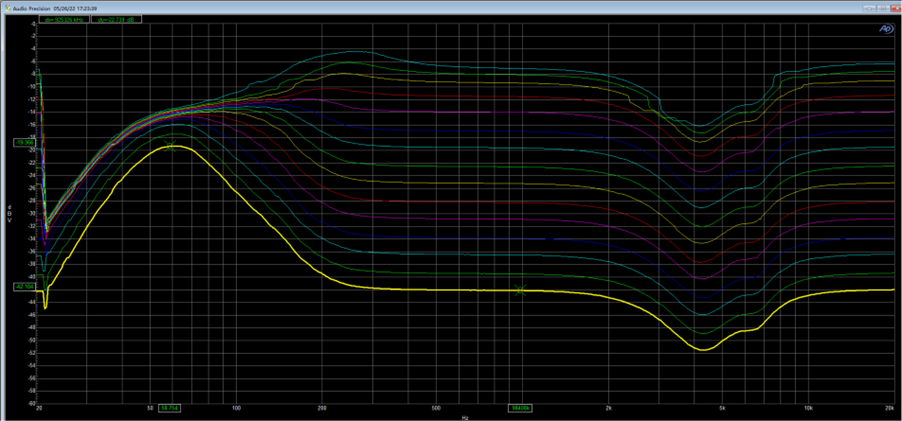
PCBA EQ measurement with Malleus AELC
Fig. Actual PCBA EQ measurement of an open-ear product running Malleus AELC.

Validated in real production hardware.

Frequency response measurements from production-PCBA open-ear products. AELC + DHSB lift the low end, smooth the mid-band and tame the treble — without invasive driver redesign.

  • Verified across BES, JieLi and Realtek SoCs
  • Tuning toolchain customized per product
  • In mass production across multiple OEM brands

Supported Chip Platforms

Portable across the Bluetooth SoC ecosystem.

AWK runs on any SoC with a DSP or FPU. Validated on the platforms below — and porting is straightforward where a customer's chip is not yet listed.

BES · 恆玄

BES Bluetooth SoCs

Full algorithm stack runs comfortably within the BT SoC power budget.
JieLi · 傑理

JieLi Bluetooth SoCs

Algorithm runs within the OWS power budget.
Realtek · 瑞昱

Realtek Bluetooth SoCs

Validated across multiple OWS and TWS designs.
Your Chip

Custom Porting

If your SoC has a DSP / FPU, AWK can be ported. Talk to us about a custom evaluation.

In Production

Shipping inside flagship products today.

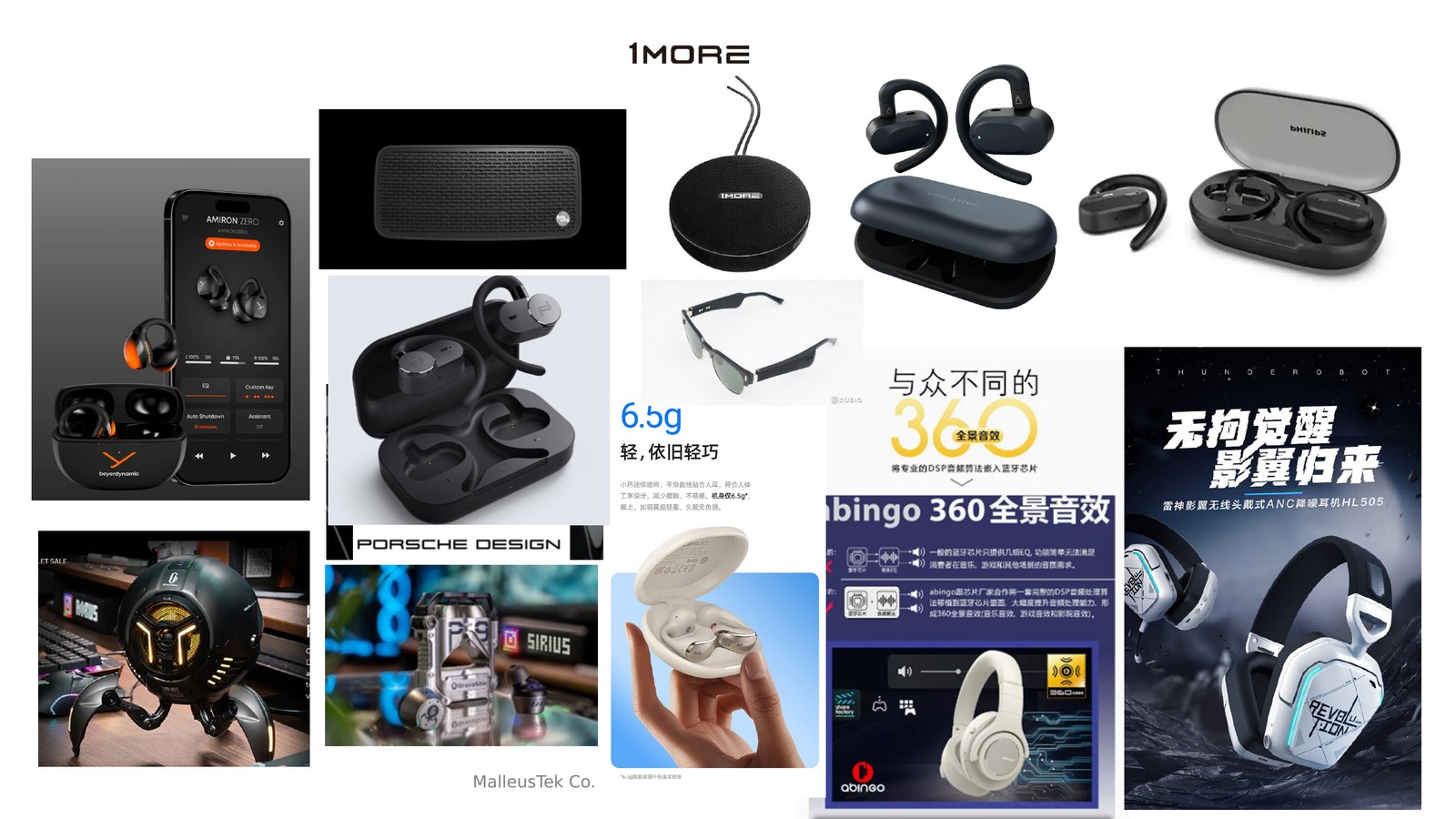
A selection of devices using Malleus algorithms in mass production — across BES, JieLi and Realtek platforms.

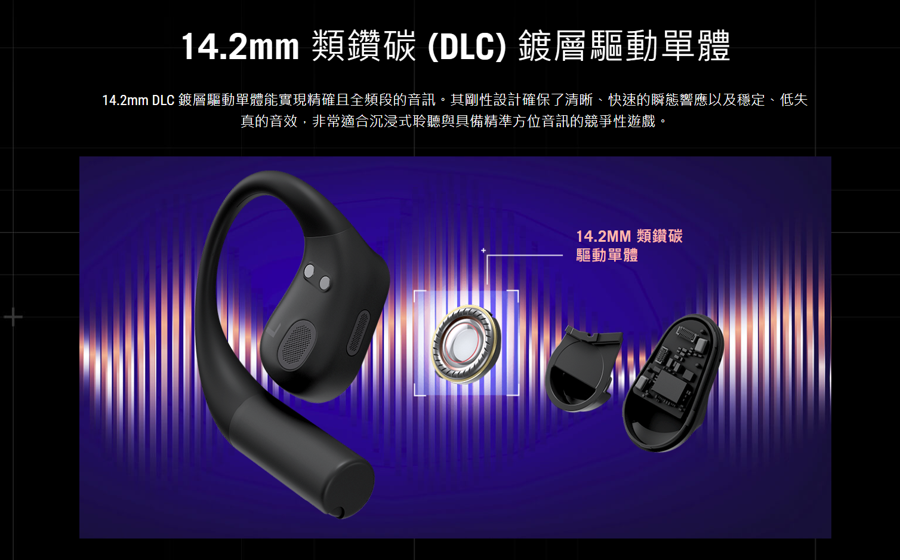
ASUS ROG Cetra Open Wireless

ASUS ROG Cetra Open Wireless

OWS · AELC
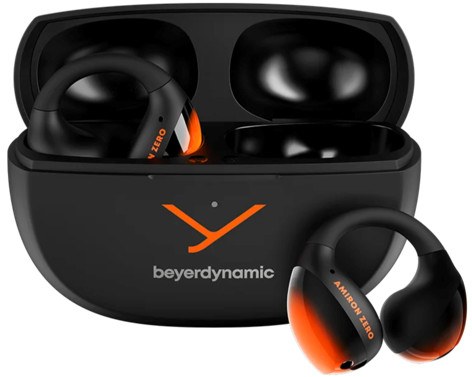
beyerdynamic AMIRON ZERO

beyerdynamic AMIRON ZERO

Open-Ear · AELC · DHSB
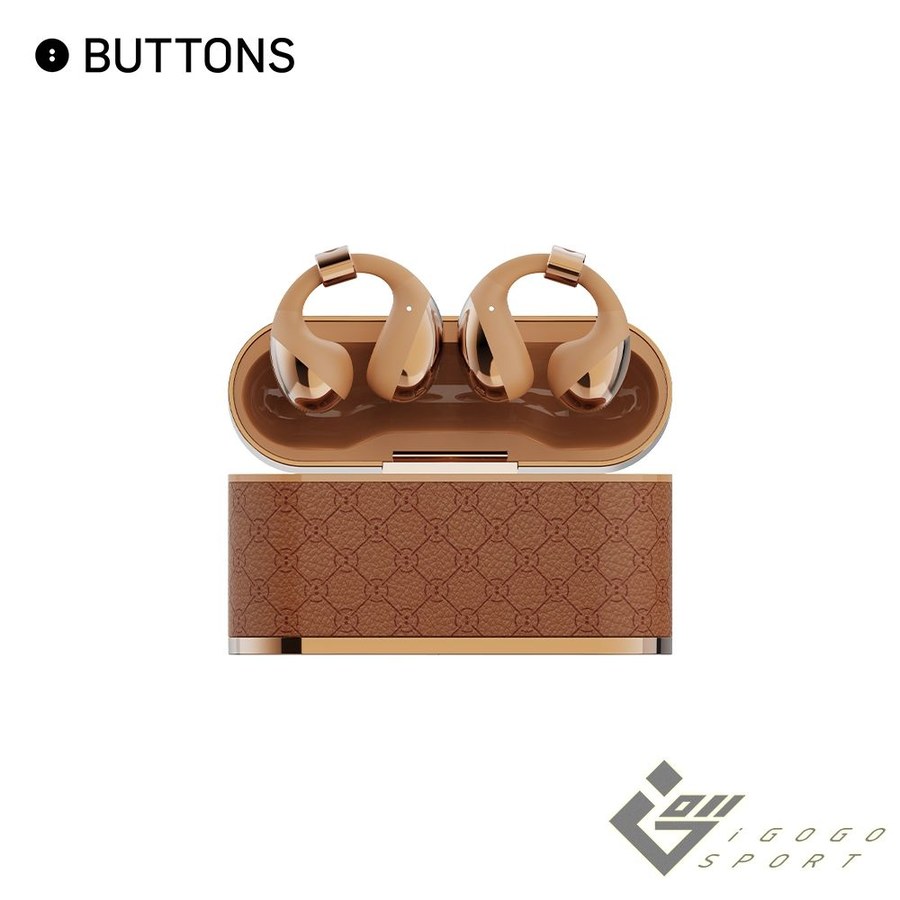
iGOGO SPORT Buttons

iGOGO SPORT Buttons

OWS · AELC · DHSB
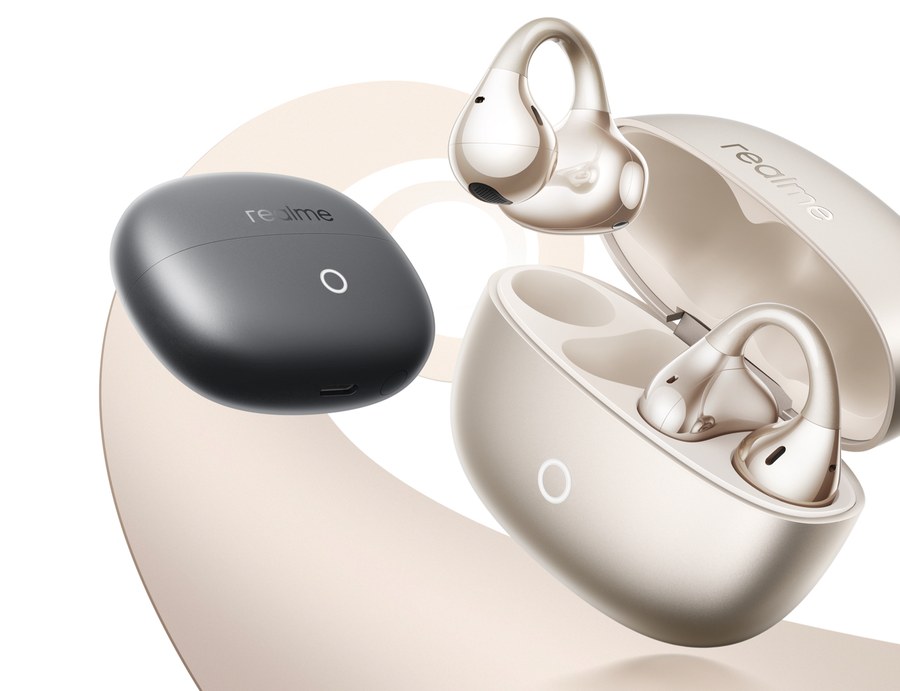
realme Buds Clip

realme Buds Clip

Open-Ear Clip · DHSB
Products using Malleus algorithms

Get in Touch

Let's tune your next product.

Primary Contact
Jesse Liu
Company
MalleusTek Co. · 錘骨科技

Bring AELC to your platform.

Tell us your chip, driver and acoustic target. We'll prepare a tuning evaluation and ROM/RAM footprint estimate.

Send an Email